
Categories
Recent Blogs
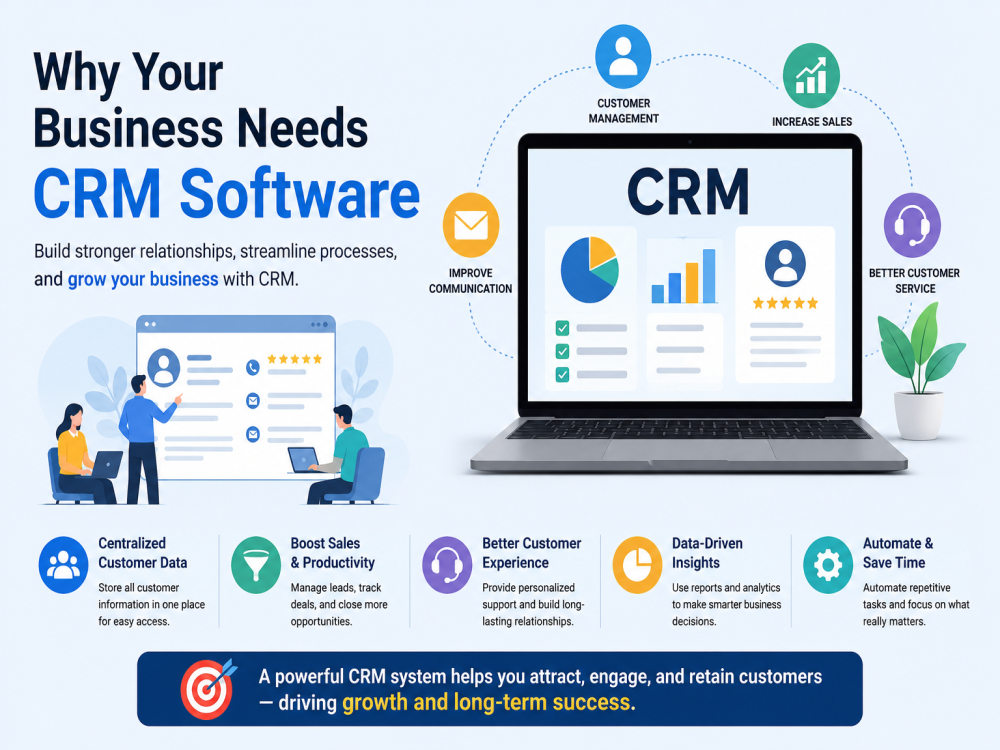
Introduction In today's competitive business environment, building strong customer relationships is just as important as offering great products or services. As your business grows, managing customer information, tracking sales, and providing excellent support can become increasingly challenging. This is where Customer Relationship Management (CRM) software becomes a game-changer. A CRM system helps businesses organize customer data, streamline communication, automate routine tasks, and improve sales performance—all from a single platform. Whether you're a startup, a small business, or a large enterprise, investing in CRM software can increase efficiency, strengthen customer relationships, and drive long-term growth. In this blog, we'll explore why CRM software is essential for modern businesses and how it can help you stay ahead of the competition. What is CRM Software? Customer Relationship Management (CRM) software is a business tool designed to manage interactions with current and potential customers. It stores customer information, tracks communication, manages sales pipelines, automates follow-ups, and provides valuable insights into customer behavior. Instead of maintaining customer data in spreadsheets or scattered files, a CRM keeps everything organized in one secure and easily accessible system. Why Every Business Needs CRM Software 1. Centralized Customer Information One of the biggest advantages of CRM software is having all customer information stored in one place. You can quickly access: Customer contact details Purchase history Previous conversations Support tickets Follow-up reminders Sales opportunities This ensures your team always has the latest customer information, improving communication and reducing errors. 2. Improved Customer Relationships Strong customer relationships lead to repeat business and long-term loyalty. CRM software allows businesses to: Respond faster to customer inquiries Personalize communication Remember important customer details Track previous interactions Provide better customer support When customers feel valued and understood, they are more likely to trust your brand and recommend it to others. 3. Better Sales Management A CRM helps sales teams manage every stage of the sales process efficiently. It allows you to: Track leads Monitor sales opportunities Schedule follow-ups Set reminders Manage sales pipelines Close deals faster With better visibility into the sales process, businesses can identify opportunities and improve conversion rates. 4. Increased Team Productivity Many repetitive tasks consume valuable time. CRM software automates routine activities such as: Sending follow-up emails Scheduling appointments Lead assignments Task reminders Data entry Customer notifications Automation allows employees to focus on building relationships and generating revenue instead of handling repetitive administrative work. 5. Better Collaboration Across Teams Sales, marketing, and customer support teams often need access to the same customer information. CRM software provides a shared platform where departments can collaborate seamlessly. Everyone stays updated on customer interactions, ensuring consistent communication and eliminating duplicate efforts. 6. Accurate Reporting and Analytics Modern CRM systems provide real-time reports and dashboards that help businesses make informed decisions. You can analyze: Sales performance Lead conversion rates Customer retention Revenue trends Marketing campaign performance Employee productivity These insights help identify strengths, weaknesses, and opportunities for growth. 7. Enhanced Customer Support Excellent customer service is essential for business success. With CRM software, support teams can quickly view customer history, previous issues, and communication records, enabling them to resolve problems faster and provide a better customer experience. Happy customers are more likely to become loyal customers. 8. Improved Marketing Campaigns CRM software helps marketing teams better understand customer behavior and preferences. Businesses can: Segment customers Send personalized email campaigns Track campaign performance Target the right audience Improve marketing ROI Personalized marketing often leads to higher engagement and better conversion rates. Key Benefits of CRM Software Using CRM software offers several long-term advantages, including: Improved customer satisfaction Faster response times Higher sales conversions Better team collaboration Increased productivity Organized customer data Smarter business decisions Enhanced marketing performance Better customer retention Business growth and scalability Signs Your Business Needs a CRM If your business experiences any of the following challenges, it's probably time to invest in CRM software: Customer information is scattered across spreadsheets. Your sales team misses follow-ups. Leads are getting lost. Customer service responses are slow. Team communication is inconsistent. Sales reports are difficult to generate. Business growth is becoming difficult to manage. A CRM system can solve these issues by centralizing data and automating essential processes. How CRM Software Improves Business Growth CRM software doesn't just organize customer information—it actively contributes to business growth. By improving customer relationships, increasing sales efficiency, and providing valuable business insights, CRM helps companies make smarter decisions and build stronger connections with their customers. As your customer base grows, CRM software scales with your business, making it easier to manage increasing workloads without sacrificing service quality. Choosing the Right CRM Software Before selecting a CRM solution, consider the following factors: Ease of use Customization options Automation features Reporting and analytics Mobile accessibility Third-party integrations Data security Customer support Scalability Pricing Choosing the right CRM ensures your business gets maximum value from its investment. Final Thoughts Customer relationships are the foundation of every successful business, and managing them effectively is essential for long-term growth. CRM software provides a centralized platform to organize customer data, streamline sales processes, improve team collaboration, and deliver exceptional customer experiences. Whether you're a small business aiming to build stronger customer connections or a growing company looking to scale operations, a CRM system can help you work smarter, close more deals, and make data-driven decisions. Investing in the right CRM software is more than a technology upgrade—it's a strategic move that can boost productivity, increase customer satisfaction, and drive sustainable business success. In today's digital marketplace, businesses that prioritize customer relationships are the ones most likely to thrive.

MD SARFRAJ
Full stack developer
Comments 0
No comments yet.