

Categories
Recent Blogs
Introduction
As businesses continue to embrace digital transformation, cloud technology has become the foundation of modern operations. From storing critical business data to running enterprise applications, the cloud offers unmatched flexibility, scalability, and cost efficiency. However, with increased reliance on cloud services comes a greater responsibility to protect sensitive information from evolving cyber threats.
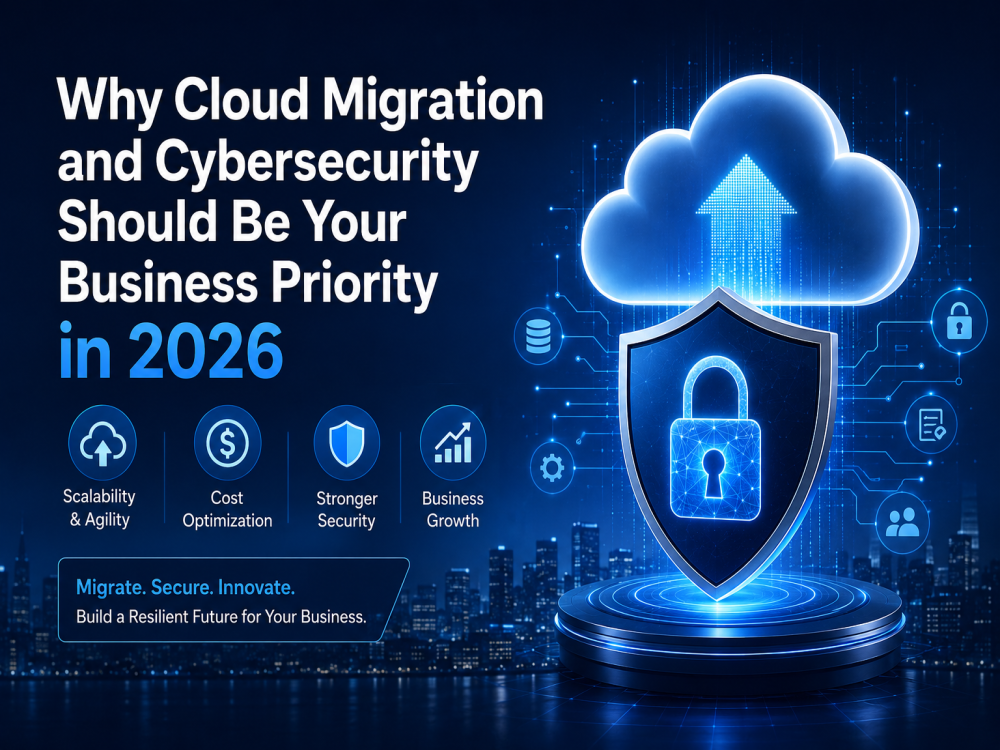
In 2026, cloud migration and cybersecurity are no longer optional investments—they are essential business priorities. Organizations that successfully migrate to the cloud while implementing strong cybersecurity measures are better positioned to improve productivity, reduce operational costs, and safeguard their reputation.
In this blog, we'll explore why cloud migration and cybersecurity should be at the top of every business leader's agenda in 2026.
What is Cloud Migration?
Cloud migration is the process of moving business applications, databases, files, and IT infrastructure from on-premise servers or legacy systems to cloud platforms such as Amazon Web Services (AWS), Microsoft Azure, or Google Cloud.
Businesses can migrate fully to the cloud or adopt a hybrid approach, depending on their operational needs and compliance requirements.
What is Cybersecurity?
Cybersecurity refers to the technologies, policies, and practices used to protect computers, networks, applications, and data from cyberattacks, unauthorized access, ransomware, malware, phishing, and other digital threats.
An effective cybersecurity strategy ensures the confidentiality, integrity, and availability of business information.
Why Cloud Migration Matters in 2026
1. Greater Business Flexibility
Cloud platforms allow employees to securely access applications and business data from anywhere, making remote and hybrid work environments more efficient.
This flexibility improves collaboration, increases productivity, and enables businesses to respond quickly to changing market demands.
2. Reduced IT Costs
Maintaining physical servers requires significant investments in hardware, maintenance, electricity, and IT personnel.
Cloud solutions operate on a pay-as-you-go model, allowing businesses to reduce infrastructure costs while paying only for the resources they actually use.
3. Scalability for Business Growth
As your business grows, your IT infrastructure should grow with it.
Cloud platforms allow organizations to instantly scale computing power, storage, and services without purchasing additional hardware.
This ensures smooth business operations during periods of rapid growth or seasonal demand.
4. Improved Disaster Recovery
Unexpected events such as hardware failures, natural disasters, or cyberattacks can disrupt business operations.
Cloud providers offer automated backups, disaster recovery solutions, and high availability, helping businesses recover quickly and minimize downtime.
5. Faster Innovation
Cloud infrastructure allows businesses to deploy applications faster, integrate modern technologies, and experiment with new services without significant upfront investments.
This accelerates innovation and helps companies remain competitive in rapidly evolving industries.
Why Cybersecurity Is More Important Than Ever
1. Rising Cyber Threats
Cybercriminals continue to develop more sophisticated attack methods, including ransomware, phishing, business email compromise, and supply chain attacks.
Businesses of all sizes are potential targets, making proactive cybersecurity essential.
2. Protecting Sensitive Business Data
Customer information, financial records, employee data, and intellectual property are valuable assets.
Strong cybersecurity measures help prevent unauthorized access, data breaches, and costly financial losses.
3. Maintaining Customer Trust
Customers expect businesses to protect their personal information.
A single security breach can damage your reputation, reduce customer confidence, and result in lost business opportunities.
Investing in cybersecurity demonstrates your commitment to protecting customer data.
4. Regulatory Compliance
Many industries must comply with data protection regulations and security standards.
Implementing proper cybersecurity controls helps businesses meet compliance requirements and avoid legal penalties.
5. Business Continuity
Cyberattacks can interrupt daily operations, causing financial losses and productivity issues.
Strong cybersecurity strategies reduce risks and help businesses continue operating even during attempted attacks.
Why Cloud Migration and Cybersecurity Go Hand in Hand
Moving to the cloud without implementing strong security measures can expose your business to unnecessary risks.
Cloud migration should always be supported by comprehensive cybersecurity practices, including:
Multi-factor authentication (MFA)
Data encryption
Identity and access management (IAM)
Endpoint protection
Regular security updates
Continuous monitoring
Secure data backups
Employee cybersecurity training
Combining cloud technology with robust security creates a resilient IT environment capable of supporting long-term business growth.
Best Practices for Secure Cloud Migration
To ensure a successful migration, businesses should follow these best practices:
Assess Your Existing Infrastructure
Evaluate current systems, applications, and data to determine what should be migrated and identify potential risks.
Choose a Trusted Cloud Provider
Select a reliable cloud provider with strong security features, compliance certifications, and dependable customer support.
Encrypt Sensitive Data
Encrypt data both during transfer and while stored in the cloud to prevent unauthorized access.
Implement Strong Access Controls
Limit system access based on user roles and responsibilities using identity and access management solutions.
Train Employees
Human error remains one of the leading causes of security incidents.
Provide regular cybersecurity awareness training to help employees recognize phishing attempts, suspicious emails, and other threats.
Monitor Continuously
Use security monitoring tools to detect unusual activity, identify vulnerabilities, and respond quickly to potential threats.
Benefits of Prioritizing Cloud Migration and Cybersecurity
Businesses that invest in both cloud migration and cybersecurity can enjoy:
Improved operational efficiency
Lower infrastructure costs
Enhanced data protection
Increased business scalability
Better disaster recovery
Stronger customer trust
Regulatory compliance
Higher employee productivity
Reduced downtime
Long-term business resilience
Common Mistakes to Avoid
Many businesses make avoidable mistakes during cloud adoption.
Common pitfalls include:
Migrating without a clear strategy
Ignoring security configurations
Weak password policies
Failing to back up critical data
Delaying software updates
Providing excessive user permissions
Neglecting employee security training
Avoiding these mistakes significantly reduces the risk of cyber incidents.
Final Thoughts
In 2026, cloud migration and cybersecurity are no longer separate IT initiatives—they are essential components of a successful business strategy. Cloud technology enables organizations to become more agile, scalable, and cost-efficient, while cybersecurity protects the digital assets that keep businesses running.
By combining secure cloud infrastructure with strong cybersecurity practices, businesses can reduce operational risks, safeguard sensitive information, maintain customer trust, and prepare for future growth.
Organizations that prioritize both today will be better equipped to compete in an increasingly digital world, adapt to emerging technologies, and confidently face the cybersecurity challenges of tomorrow.

Md Sarfraj
Developer
Comments 0
No comments yet.